
To ERG Or Not To ERG
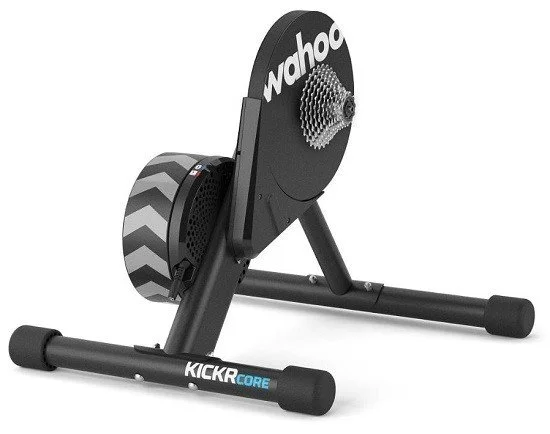
It seems that everyone now owns a smart-trainer, opening up endless possibilities for indoor training apps that can control the resistance you feel when riding in these virtual worlds.
Many smart trainers offer a feature called ‘ERG Mode’ which dynamically adjusts the resistance of the trainer to a fixed or predetermined resistance. As you ride, you’re locked into that target — whether you like it or not!
While ERG Mode can be a powerful tool for structured training, it’s not always the best option for every workout. In some cases, switching to slope or ‘dumb trainer’ mode might serve you better. Let’s break down the pros and cons so you can decide when to use it — and when to turn it off.
The Pros:
Prevents Over Enthusiasm:
One of the biggest challenges athletes face is pacing during intervals. It’s easy to start too hard, burning out before the interval is complete - a phenomenon we affectionately call ‘ambition above ability’. ERG Mode holds you accountable, preventing those costly early surges.
Helps control recovery:
Not only does ERG Mode hold you accountable during the actual intervals, but it also keeps you in check during the recovery between efforts. Some athletes have a tendency to completely back off the power as soon as they finish a hard effort when the best intensity to clear lactate may be a little harder than they would normally spin at. With ERG Mode you still get to recover, but at a level that is more beneficial to the upcoming intervals than active recovery.
Teaches consistency in RPE (Rate of Perceived Effort):
Our natural tendency is to fluctuate power - surging and backing off unpredictably. ERG Mode eliminates this variability, forcing you to hold steady output, whether pedalling at 70 or 110 rpm. Over time, this helps athletes develop a more accurate sense of Rate of Perceived Effort (RPE) for different intensities.
The Cons:
Fitness testing:
There are times when ERG Mode can actually be detrimental to a given session. The most obvious is during sessions where you’re trying to determine your current fitness. On many occasions I’ve seen athletes use ERG Mode when fitness testing to help stimulate them to their pre-determined ‘best effort’. A fitness test is meant to challenge both the physical and psychological capacity of an athlete and should be free from any external stimulus other than our own motivation.
Our ever-changing daily fitness status:
FTP isn’t a fixed value. It’s a fluid, ever-moving target, one that can change from week to week and even day to day. You’re going to have days when you feel like your legs are made of jelly and other days when you think your FTP is set way too low. It could be because you’re at the tail end of a number of weeks of structured training and your body is reaching its limits. Or maybe you just didn’t eat and drink enough before you started the session. Knowing that the anaerobic threshold is an intensity range means that dialling in a fixed power number doesn’t allow for the flexibility for the legs to respond based on how they’re feeling on that day.
You have to put your ego aside and listen to your body, it knows a thing or two. Take the hint and dial back the intensity of your workout by 5% or so. If you don’t and insist on pushing it, the chances are you’ll overextend yourself, you’ll not be able to complete the workout and you’ll send your mental state into a downward spiral… all because of a single bad session.
The opposite can also be true after some well-structured training. Your FTP might have gone up 5% but it’s hard to tell and your smart trainer would have no idea. You may set the power too low and the workout is too easy to provide meaningful stimulus. ERG Mode restricts the cyclist from pushing for more on the days they feel great.
Sessions that require high neuromuscular response:
There are a number of HIIT training workouts that are popular called Micro Intervals or Tabatas. These sessions involve short high intensity efforts followed by even shorter recovery periods, repeated multiple times. Because the adjustment to the trainer resistance takes a few seconds to change each time then this would impact the very quick accelerations and decelerations of these types of workouts.
To Finish:
Understanding how ERG Mode might help or hinder the goal of your workout is important. It may provide a ‘carrot to chase’ which could be valuable in some situations but be mindful of listening to your body. Developing the ability for the brain to determine optimal intensity is also a skill worth developing.
Strike a balance: Use ERG Mode for steady-state intervals and controlled recovery, but don’t be afraid to switch it off when you need to test yourself, practice pacing, or hit those short, punchy efforts. Ultimately, developing your ability to gauge effort and make real-time adjustments is a skill that will serve you just as well on the road as on the trainer as ultimately, there’s no ERG Mode on race day!
Bevan McKinnon / March 2025