
How Easy Can You Train and Still Get Fitter
There is a tendency in endurance sport to assume that harder training must produce more fitness. If 60 minutes of easy running is good, then surely running a little faster is better. If Zone 2 is beneficial, then sitting near the top of Zone 2 must maximise those benefits. And if a session feels almost too easy, it's tempting to wonder whether it's really doing anything at all. But what if we're asking the wrong question?
Rather than asking: How hard can I train while still calling it easy, perhaps we should be asking: How easy can I train and still create a worthwhile adaptation?
A recent study by Guimarães and colleagues, published in the Journal of Strength and Conditioning Research in 2026, provides an interesting perspective on exactly that question. Researchers took trained amateur runners and compared six weeks of training where approximately 70% of their training volume was performed either around the upper end of their easy aerobic training range or approximately 10–15% below it. The remaining training included harder work and was essentially the same between groups. In practical training terms, think of one group consistently training toward the top of Zone 2, while the other deliberately backed away from that upper boundary and trained considerably easier.
You might expect the runners training towards the top of Zone 2 to gain more fitness - after all, they were working harder - but they didn’t. Both groups improved critical speed and 3600 m running performance by similar amounts. The researchers also found similar changes in the neuromuscular measures they assessed. One measure, anaerobic running capacity (when working above threshold), actually declined slightly in both groups — a reminder that six weeks of easy-dominant training isn’t a free lunch for every fitness quality, regardless of how it’s distributed.
What did differ was the cost of achieving those improvements. The runners training harder reported greater perceived exertion, higher training strain and signs of greater fatigue compared with those performing their low-intensity work approximately 10–15% slower. In simple terms: One group worked harder. Both groups got fitter. That doesn't mean intensity doesn't matter. It doesn't mean we should perform all our training as slowly as possible. And it certainly doesn't tell us that going progressively slower will continue producing exactly the same results. But it raises an important question about the way endurance athletes approach Zone 2 training.
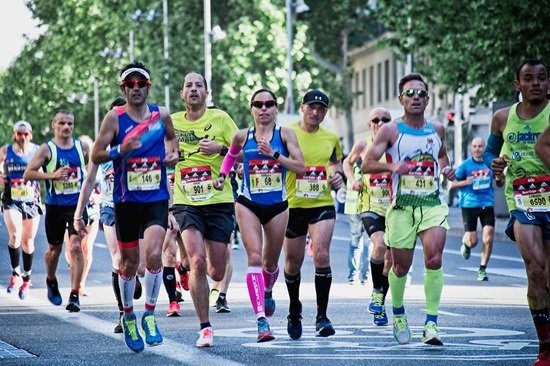
Does Easy Training Need to Feel Productive? We often judge the value of a workout by how much we can feel it. A harder session produces more breathing, more sweat, more muscular discomfort and usually more fatigue. Those sensations provide immediate feedback that we've "done something." Very easy training doesn't always provide that reassurance. But our physiology doesn't suddenly stop responding because we move further down through Zone 2. Muscle contractions still require energy. Oxygen consumption remains elevated. Type I muscle fibres are repeatedly recruited. Blood flow increases. Fat and carbohydrate are metabolised to produce ATP. The cellular machinery responsible for supporting prolonged aerobic exercise is still being challenged. There isn't a physiological switch where the top of Zone 2 is training and everything below it is merely recovery.
The more interesting question is how much stimulus we actually need. Stimulus Is Only Half the Equation. Every training session creates both a stimulus and a cost. The stimulus is what we're interested in. It's the signal that eventually contributes to adaptations such as improved mitochondrial function, capillarisation, aerobic metabolism and endurance performance. But producing that signal isn't free. Training also consumes glycogen, creates muscular stress, contributes to autonomic and psychological load and adds to the fatigue that must subsequently be recovered from.
Imagine two 90-minute aerobic sessions. One is performed toward the top of Zone 2. The other is performed comfortably lower in Zone 2. Both may create a broadly similar physiological stimulus, but the harder one is likely to carry a greater recovery cost. That means the most important question isn't necessarily: Which workout gives me the biggest stimulus today? It might be: Which workout gives me enough stimulus for the lowest necessary cost? Because endurance training doesn't happen one session at a time. Tomorrow matters too. So does the next day. And the week after that!
The Goal Isn't to Win the Easy Session. This becomes particularly important when training volume increases. An athlete training three hours per week and an athlete training 15 hours per week face very different problems. If training time is extremely limited, spending more of that available time toward the top of Zone 2, or even edging into Zone 3, may make sense. When volume itself has to stay low, that trade-off can help maximise the stress gained from the time available. But as training volume increases, the cost of repeatedly pushing easy sessions toward the top of Zone 2 also accumulates. A little more power here.
A slightly faster run there. An aerobic ride that gradually becomes tempo. None of those decisions necessarily looks problematic in isolation. But endurance performance isn't determined by the success of today's workout. It's built through our ability to absorb training repeatedly over weeks, months and years.
Sometimes the smarter session is therefore not the hardest session we can recover from. It's the easiest session that still does the job. So Where Is the Floor? That's where things become interesting. We spend enormous amounts of time in endurance sport discussing ceilings. What's my FTP? What's my threshold pace? What's the top of my Zone 2? What's the highest power I can hold while keeping this an easy aerobic session? These are useful questions, but perhaps there's another one we don't ask often enough: How far below those boundaries can we train and still meaningfully improve aerobic fitness?
For a cyclist with an FTP of 300 watts, for example, it's easy to become fixated on riding at the top of a prescribed Zone 2 range because 200 watts somehow feels more productive than 170 watts. But does that additional 30 watts actually produce a meaningfully better adaptation? And if it creates more fatigue, uses more carbohydrate and increases the recovery cost of the session, was it actually the better training decision? The answer will depend on the athlete. A beginner can gain substantial fitness from intensities that would provide relatively little stimulus to an elite endurance athlete. Training history, fitness, available training time, total volume and the other sessions being performed during the week all matter. There probably isn't a single intensity that represents the universal minimum effective dose.
But this recent research gives us another reason to challenge a deeply ingrained endurance-training assumption: Just because a session feels harder doesn't necessarily mean it's producing a better training outcome. And when two approaches can produce a similar adaptation, the one that leaves us fresher may ultimately give us more opportunities to train well again.
Bevan McKinnon / August 2026